9 Tips to Use a Rake for Final Leveling During Renovation
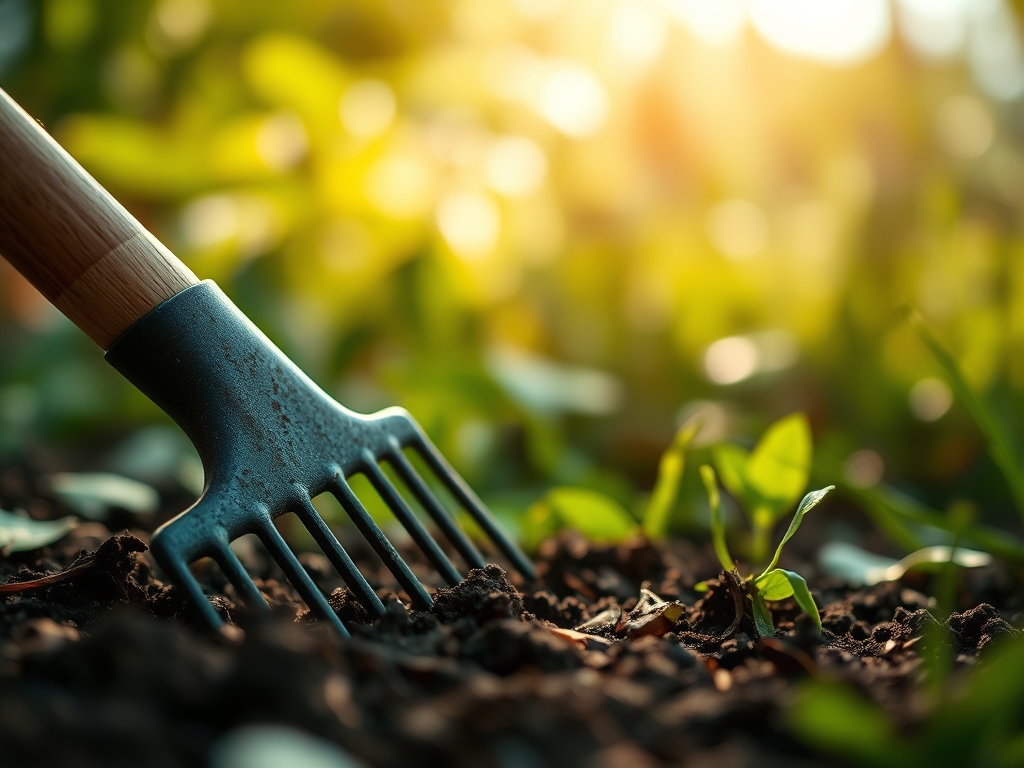
The scent of damp, disturbed earth signals the start of a successful site overhaul. When the soil moisture reaches the point where a handful of loam crumbles rather than smears, the window for structural correction opens. Achieving a perfectly flat seedbed requires more than physical effort; it demands an understanding of soil physics and surface tension. Using a rake for garden renovation is the final mechanical intervention before biological processes take over. This phase determines the uniformity of water infiltration and prevents the pooling that leads to anaerobic root zones. A flat surface ensures that every seed or plug experiences identical environmental pressures. Without this precision, the micro-topography of the site will create uneven growth patterns that persist for the life of the landscape. Success depends on the interaction between the metal tines and the aggregate stability of the substrate. Proper leveling establishes the foundation for a resilient rhizosphere where gas exchange occurs at an optimal rate.
Materials:
The ideal substrate for a renovation is a **friable loam** with a **Cation Exchange Capacity (CEC) between 15 and 25 meq/100g**. This texture allows for easy manipulation with a landscape rake while maintaining enough structure to support heavy equipment. Before leveling, adjust the soil pH to a range of **6.2 to 6.8** to maximize nutrient bioavailability. For a standard renovation, incorporate a starter fertilizer with an **NPK ratio of 10-20-10**. The high phosphorus content supports rapid root elongation in the early stages of establishment. Ensure the organic matter content sits between **3% and 5%** by volume. If the soil is too sandy, the rake will move through it without creating the necessary tension for leveling. If it contains too much clay, the tines will create clods rather than a fine tilth. Use a **36-inch aluminum landscape rake** for large areas and a **12-inch steel bow rake** for concentrated grading near fixed structures.
Timing:
The biological clock for renovation is dictated by soil temperature and photoperiod. In Hardiness Zones 5 through 7, the primary window occurs between late August and mid-September. This timing allows the plants to move from the vegetative stage to a strong establishment phase before the first killing frost, which typically occurs between October 15 and November 15. In Zones 8 and 9, the window shifts toward late autumn or early spring to avoid the high transpiration rates of summer. Soil temperatures must remain between 55 and 70 degrees Fahrenheit for optimal seed germination and root development. Leveling during a period of active growth ensures that any disturbed soil is quickly colonized by beneficial microbes, preventing the erosion of the newly established grade.
Phases:

Sowing
Distribute the seed evenly across the leveled surface. Use the rake to lightly incorporate the seed to a depth of 1/8 to 1/4 inch. This ensures adequate seed-to-soil contact, which is critical for moisture absorption and the breaking of dormancy.
Pro-Tip: Proper seed depth prevents photo-inhibition in certain species while protecting others from desiccation. Maintaining this depth ensures that the emerging radicle can immediately access the capillary water held within the soil pores.
Transplanting
When placing larger specimens, use the rake to smooth the transition between the root ball and the surrounding grade. The goal is to eliminate any air pockets that could cause root desiccation. Ensure the crown of the plant sits exactly at the soil line to prevent stem rot.
Pro-Tip: Eliminating air pockets through precise leveling encourages mycorrhizal symbiosis. These beneficial fungi require direct contact with root hairs to begin the exchange of phosphorus for plant sugars.
Establishing
The first 21 days post-leveling are the most critical. Use the rake to break up any surface crusting that occurs after heavy rain. This keeps the surface permeable and allows for the gas exchange necessary for cellular respiration in the developing roots.
Pro-Tip: Maintaining a loose surface layer prevents auxin suppression caused by mechanical impedance. When roots hit compacted soil, they send signals to the rest of the plant to slow down growth, a process known as thigmomorphogenesis.
The Clinic:
Physiological disorders often stem from poor leveling or improper soil chemistry.
Symptom: Yellowing of lower leaves while veins remain green.
Solution: This indicates Nitrogen chlorosis. Apply a quick-release nitrogen source to restore chlorophyll production.
Symptom: Purple tinting on the underside of leaves or stems.
Solution: This is a sign of Phosphorus deficiency, often caused by cold soil temperatures or a pH below 6.0. Increase the pH using calcitic lime.
Symptom: Localized wilting despite adequate irrigation.
Solution: This usually points to hydrophobic soil patches or air pockets left during the leveling phase. Use a soil moisture meter to identify dry spots and aerate the area manually.
Fix-It for Compaction: If the rake bounces off the surface, the bulk density is too high. Incorporate gypsum at a rate of 40 pounds per 1,000 square feet to improve soil structure and flocculation.
Maintenance:
A renovated site requires disciplined irrigation. Deliver 1.5 inches of water per week at the drip line, ideally split into two or three sessions to encourage deep rooting. Use a soil moisture meter to verify that water is penetrating at least 6 inches deep. For pruning, use sharp bypass pruners to make clean cuts at a 45-degree angle above a lateral bud. This prevents the jagged edges that invite pathogens. For weeding in tight spaces, a hori-hori knife allows for the removal of the entire taproot without disturbing the leveled grade. Monitor for signs of senescence in older leaves, which is a natural part of the plant life cycle, but intervene if it occurs in more than 10% of the new growth.
The Yield:
Harvesting from a renovated garden requires precise timing to capture peak nutritional density. For leafy greens, harvest in the early morning when turgor pressure is at its highest. This ensures the cell walls are fully hydrated, providing maximum crispness. Use a sharp blade to avoid crushing the vascular tissue. For flowering species, cut when the first two florets have opened. Immediately submerge the stems in 100-degree Fahrenheit water to remove air bubbles from the xylem. This "hardening off" process extends the post-harvest life of the plant significantly. Store the harvested material at 34 to 40 degrees Fahrenheit to slow down the metabolic rate and preserve the sugars and oils.
FAQ:
How do I know if the soil is too wet to rake?
Squeeze a handful of soil into a ball. If it stays in a solid clump and stains your palm, the moisture content is too high. It should crumble easily under light pressure to avoid destroying soil structure.
Why is my rake leaving deep grooves in the soil?
Deep grooves indicate the soil is too loose or the rake angle is too steep. Hold the handle at a lower angle to the ground. This allows the weight of the rake head to glide and level the surface.
Can I use a rake to remove existing grass?
A rake is designed for leveling and debris removal, not excavation. Use a sod cutter or a spade to remove the bulk of the vegetation. Use the rake afterward to smooth the exposed subsoil before adding topsoil.
What is the best rake for a fine finish?
A landscape rake with a wide, flat head and closely spaced tines is best for final leveling. The flat back of the rake can be flipped over to "float" the soil, filling in small depressions perfectly.