7 Leveling Tips to Use a Garden Rake for Seedbeds
Using a garden rake for vegetable clearing transforms rough, clodded soil into a fine-textured seedbed that allows germination rates to jump by 30 to 40 percent compared to unprepared ground. The steel tines break apart crusted surface layers, eliminate air pockets that dry out seed zones, and create the uniform tilth necessary for consistent root penetration. A well-raked bed ensures that carrot taproots meet no resistance and that lettuce seeds nestle into direct contact with moisture-holding particles. The rake becomes an extension of soil physics, manipulating particle size distribution at the critical top two inches where germination biology unfolds.
Materials
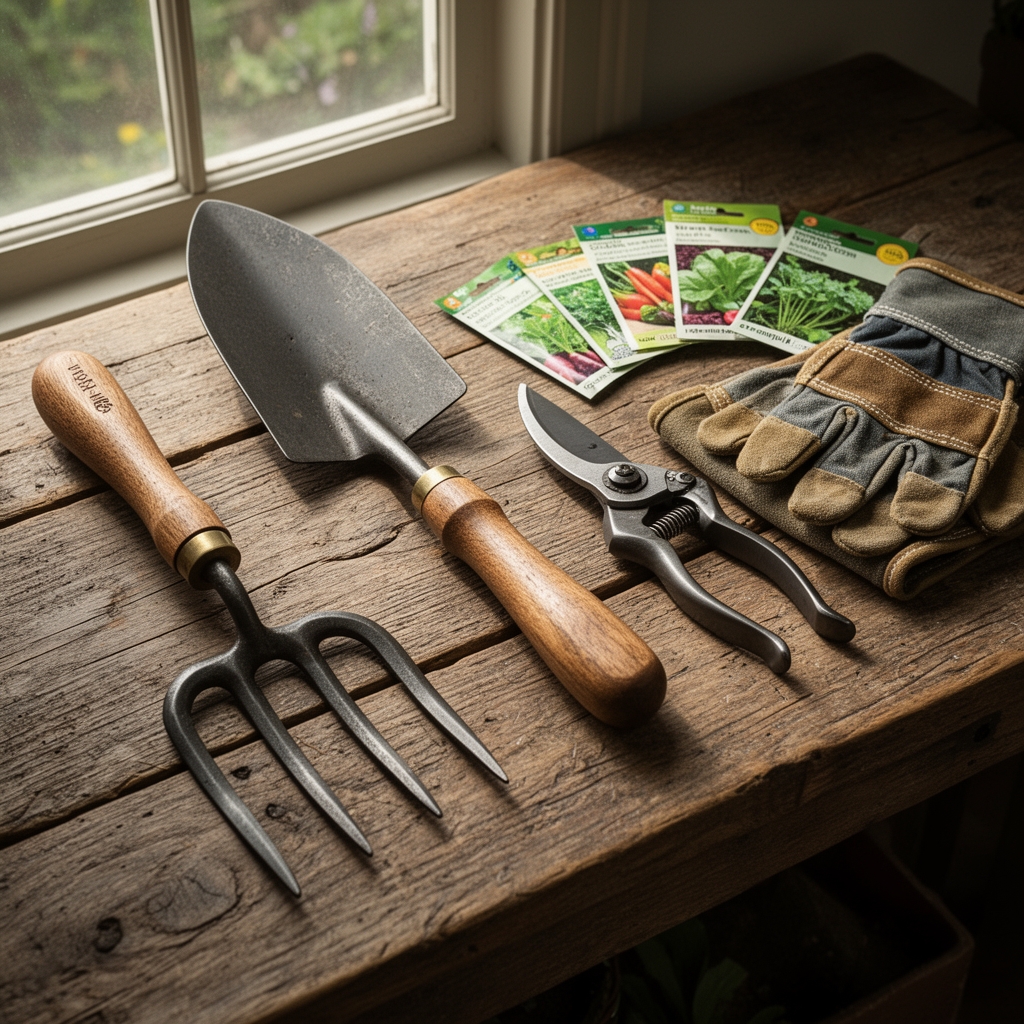
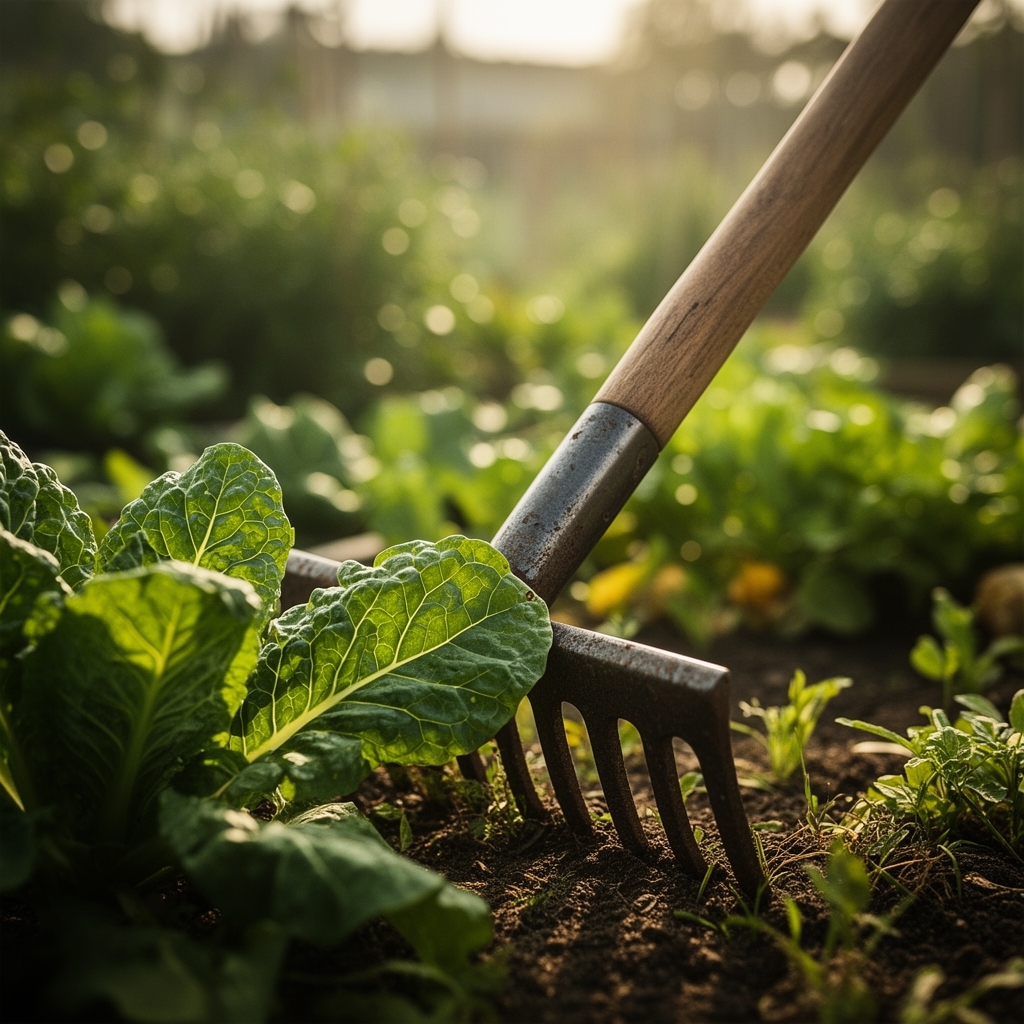
Select a bow rake with 14 to 16 steel tines spaced 0.75 inches apart. The head should measure 16 inches wide for standard 30-inch beds. Hardwood handles of 60 inches provide leverage without requiring excessive bending.
Amend soil with compost analyzed at pH 6.5 to 7.0 and a nutrient profile near 1-1-1 for balanced cation exchange capacity. For heavy feeders like tomatoes, incorporate a 4-4-4 organic meal at 2 pounds per 100 square feet two weeks before raking. Blood meal (12-0-0) corrects nitrogen deficiency in depleted beds, applied at 1 pound per 100 square feet. Rock phosphate (0-3-0) supports root initiation in legumes; broadcast 3 pounds per 100 square feet and rake to a 4-inch depth.
Mycorrhizal inoculants should contain Glomus intraradices at 120 propagules per gram. Mix 2 tablespoons per 10 square feet into the top inch during final raking passes.
Timing
In USDA Hardiness Zones 5 through 7, rake seedbeds 7 to 10 days after the last spring frost date when soil temperature at 2-inch depth reaches 50°F for cool-season crops and 60°F for warm-season varieties. Surface moisture content should sit between 50 and 60 percent of field capacity. Squeeze a handful of soil; it should form a ball that crumbles under light thumb pressure. Raking saturated soil destroys aggregates and compacts the profile. Raking dust creates a surface crust after the first irrigation.
For fall crops in Zone 6, prepare beds 8 weeks before the first expected frost. Soil retains summer warmth, accelerating germination of brassicas and root vegetables.
Phases
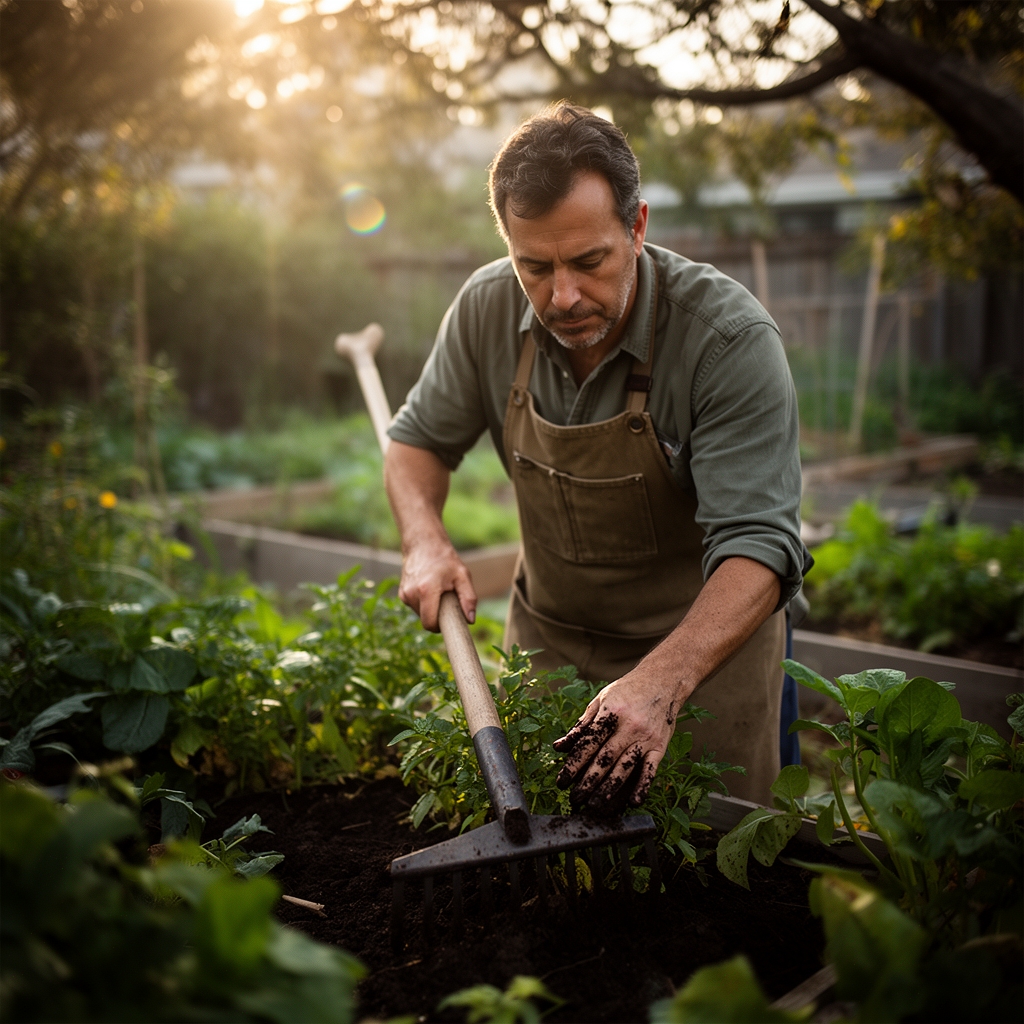
Sowing Phase
Clear the bed of debris by raking perpendicular to the bed length. Remove stones larger than 0.5 inches and root fragments over 2 inches. Make a second pass parallel to the bed to level high spots. Check grade with a 4-foot straightedge; variation should not exceed 0.25 inches across the bed width.
Create shallow furrows for large seeds like beans and peas by inverting the rake and dragging the handle end along a taut string line. Furrow depth should equal three times seed diameter. For broadcasting small seeds such as carrots or lettuce, use the back of the rake tines to tamp the surface to 0.125-inch firmness, ensuring capillary action draws moisture to the seed coat.
Pro-Tip: Apply Trichoderma harzianum at 1 × 10^6 colony-forming units per gram of soil to the furrow bottom before sowing. This fungal antagonist colonizes the rhizosphere and suppresses damping-off pathogens during the vulnerable cotyledon stage.
Transplanting Phase
Rake transplant holes to 1.5 times the root ball diameter. Break up sidewall glazing caused by trowel compaction by scoring with the rake tines at 45-degree angles. This encourages lateral root expansion and prevents circling.
Backfill with native soil mixed 1:1 with finished compost. Rake a shallow moat 2 inches from the stem to direct water toward the root zone rather than running off the bed edge.
Pro-Tip: For solanaceous crops, bury stems up to the first true leaves. Adventitious roots emerge from buried nodes, increasing auxin distribution and phosphorus uptake capacity by 25 percent.
Establishing Phase
Rake a 1-inch layer of aged hardwood mulch around established transplants after the soil warms to 65°F. Keep mulch 3 inches away from stems to prevent collar rot. The mulch moderates soil temperature fluctuations and reduces evapotranspiration by 40 percent.
Lightly rake between rows every 10 days to disrupt weed seedling emergence. Shallow cultivation at 0.5-inch depth severs weed taproots without damaging crop roots that occupy the 2- to 6-inch zone.
Pro-Tip: Side-dress nitrogen-hungry crops with 5-1-1 fish emulsion, raked into a 2-inch trench 4 inches from the plant base, at the onset of flowering. This pulse of nitrogen supports fruit set without promoting excessive vegetative growth.
Troubleshooting
Symptom: Seedlings emerge unevenly with bare patches.
Solution: Soil surface dried before germination. Rake lightly to break the crust, then mist twice daily until cotyledons expand. Crust layers create a 10- to 15-fold increase in penetration resistance.
Symptom: White fungal threads on soil surface around seedlings.
Solution: Damping-off caused by Pythium or Rhizoctonia. Rake out infected seedlings and surrounding soil to a 3-inch radius. Drench the area with a solution of 1 tablespoon hydrogen peroxide per gallon of water. Improve drainage by raking in perlite at 20 percent by volume.
Symptom: Transplants wilt despite adequate watering.
Solution: Compacted root interface. Excavate one plant to inspect. If roots circle the original root ball, the sidewalls were too smooth. Rake future holes more aggressively and add compost to improve soil structure.
Symptom: Shallow furrows disappear after irrigation.
Solution: Excessive silt or clay content causes slumping. Rake in coarse sand at 30 percent by volume to increase aggregate stability. Sand particles create skeletal structure that resists collapse.
Symptom: Weeds germinate faster than crop seeds.
Solution: Weed seed bank activated by light exposure during raking. Allow the bed to rest for 7 days after initial raking. Germinating weeds will emerge. Rake shallowly at 0.25-inch depth to kill seedlings, then sow crop seeds immediately.
Maintenance
Apply 1 inch of water per week, measured with a rain gauge placed at bed level. Rake the surface lightly after each irrigation once soil reaches 40 percent moisture to prevent crust formation and restore gas exchange.
Side-dress crops every 3 weeks with compost raked into shallow trenches between rows. Aim for 0.5 inches of compost per application to maintain organic matter at 5 percent by mass.
Rake out spent plants at season end, chopping residues into 3-inch fragments to accelerate decomposition. Incorporate a cover crop such as winter rye, raked to 0.5-inch depth, to prevent erosion and fix atmospheric nitrogen.
FAQ
How deep should I rake a seedbed?
Rake to 2 inches for small-seeded crops like lettuce and carrots. Rake to 4 inches for large-seeded crops like beans and corn. Deeper raking dilutes organic matter and disrupts beneficial microbial layers.
Can I rake wet soil?
No. Raking wet soil destroys aggregates, reduces pore space, and causes compaction. Wait until soil moisture drops to 50 percent of field capacity.
Should I rake in fertilizer or apply it on top?
Rake granular fertilizers into the top 2 inches to position nutrients in the active root zone. Surface applications lose 30 percent of nitrogen to volatilization within 48 hours.
How often should I rake between crop rows?
Rake shallowly every 10 to 14 days during the first 6 weeks after planting. This disrupts weed germination without damaging crop roots. Stop raking once crop canopy shades the soil and suppresses weed growth.
What rake angle creates the finest tilth?
Hold the rake at 30 degrees to the soil surface and pull toward your body. This angle lifts clods into the tines rather than pushing them forward, maximizing breakup without compacting the subsoil.