6 Setup Steps to Prepare a Hydroponic Vegetable Garden
Growing crisp lettuce and ripe tomatoes indoors without soil once seemed impossible, but modern hydroponic systems have transformed how gardeners approach vegetable production. Learning how to prepare a garden for a hydroponic vegetable garden begins with understanding that "preparation" shifts from soil amendments to controlled environment design, water chemistry management, and nutrient delivery systems that bypass traditional cultivation methods entirely.
Materials
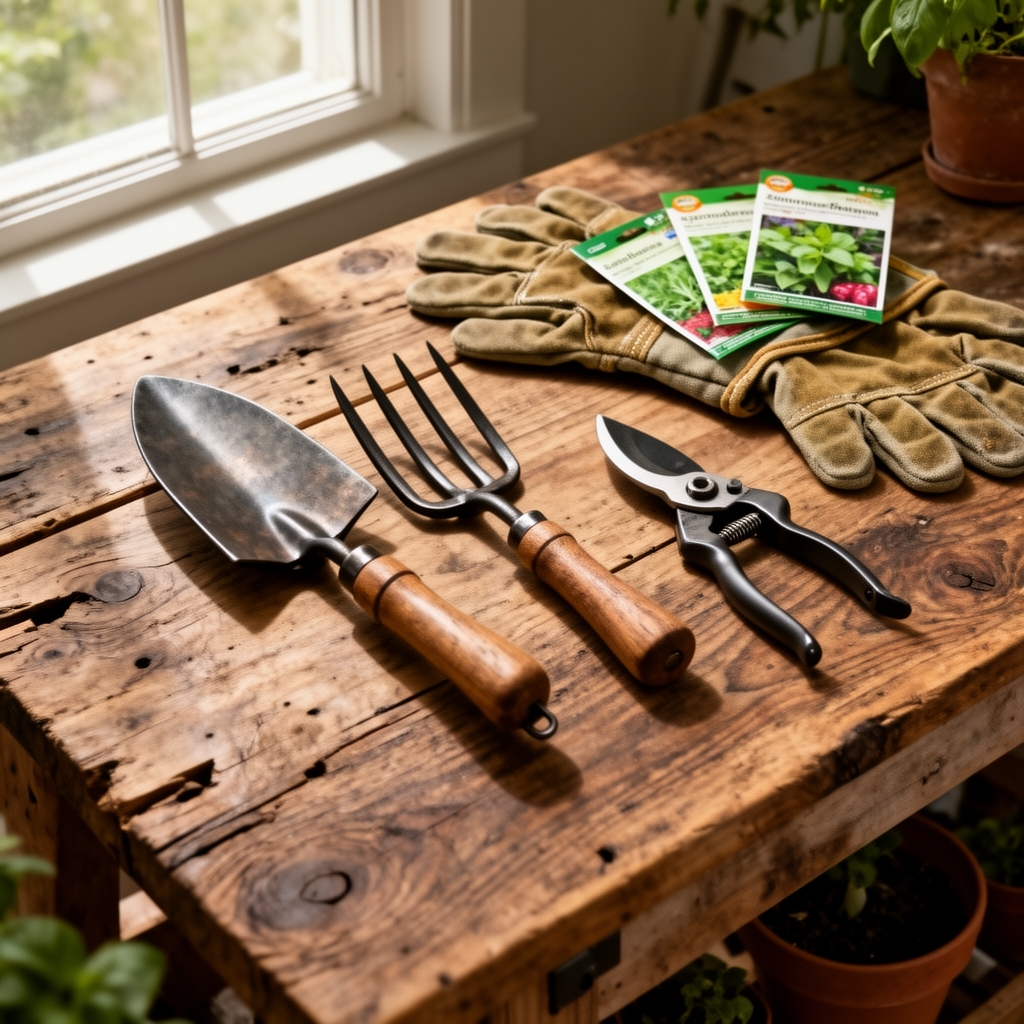
A complete hydroponic setup requires precision equipment and measured nutrient inputs. The reservoir system forms the core, typically a 10- to 20-gallon food-grade container with lightproof walls to prevent algal blooms. An air pump delivering 4-6 watts per gallon maintains dissolved oxygen levels above 6 ppm, critical for root respiration.
Nutrient solutions replace soil-derived minerals. A balanced hydroponic fertilizer rated 5-5-5 (nitrogen-phosphorus-potassium) serves most leafy greens during vegetative growth, while fruiting crops like tomatoes and peppers require transition to 3-8-8 formulations during flowering. Maintain pH between 5.5 and 6.5 using phosphoric acid to lower or potassium hydroxide to raise readings. Calcium nitrate and magnesium sulfate supplements prevent blossom-end rot and interveinal chlorosis respectively.
Growing media options include rockwool cubes (pH-neutral after buffering to 5.5), expanded clay pellets with excellent cation exchange capacity, or coconut coir amended with perlite at 70:30 ratios for moisture retention combined with drainage. Net pots ranging from 2 to 6 inches hold media and support root masses.
LED grow lights provide photosynthetically active radiation. Install full-spectrum panels delivering 400-600 micromoles per square meter per second at canopy height. Timer controllers automate 14-16 hour photoperiods for vegetative phases and 12 hours for fruiting.
Timing
Hydroponic systems eliminate traditional frost-date constraints but still benefit from seasonal planning. Indoor operations in USDA Hardiness Zones 3-7 perform optimally during winter months when heating costs align with lighting schedules and ambient temperatures reduce cooling demands. Start seeds 4-6 weeks before transplanting into net pots.
Summer operations in Zones 8-10 require active cooling systems to maintain reservoir temperatures below 72°F, preventing root pathogens like Pythium species. Begin cool-season crops (lettuce, kale, spinach) in September for harvest through March. Warm-season fruiting vegetables (tomatoes, cucumbers, peppers) transplant in March for production through August.
Calculate system capacity by allowing 2-4 square feet per plant for determinate tomatoes, 1 square foot for lettuce heads, and 3-6 square feet for indeterminate vining cucumbers with vertical trellising.
Phases

Sowing Phase
Germinate seeds in 1-inch rockwool starter cubes pre-soaked in pH 5.5 water for 24 hours. Place cubes in covered propagation trays maintaining 75-80°F substrate temperature and 80-90% relative humidity. Lettuce germinates in 2-3 days, tomatoes in 5-7 days, and peppers in 7-14 days. Expose seedlings to light immediately upon cotyledon emergence, delivering 200-300 micromoles.
Pro-Tip: Inoculate root zones with Trichoderma harzianum at 10^6 colony-forming units per milliliter during the sowing phase. This beneficial fungus colonizes developing roots and provides competitive exclusion against pathogenic water molds.
Transplanting Phase
Transfer seedlings showing two sets of true leaves into net pots filled with expanded clay. Position root systems 1 inch above nutrient solution level in deep-water culture systems or insert into drip emitter zones for recirculating setups. Initial nutrient concentration should measure 800-1000 ppm (parts per million) as measured by electrical conductivity.
Reduce photoperiod stress by maintaining consistent 16-hour light cycles. Support weak-stemmed transplants with bamboo stakes positioned at 60-degree angles to encourage auxin distribution favoring lateral branching.
Pro-Tip: Supplement transplant water with kelp extract containing cytokinins at 1 tablespoon per gallon for 72 hours post-transfer. This reduces transplant shock by 30-40% and accelerates new root hair formation.
Establishing Phase
Mature plants enter production within 3-5 weeks for leafy greens and 8-12 weeks for fruiting crops. Increase nutrient strength to 1200-1600 ppm for tomatoes and peppers. Monitor leaf tissue for nutrient deficiencies weekly. Calcium deficiency appears as necrotic leaf margins, while nitrogen deficiency causes uniform chlorosis of lower leaves.
Prune indeterminate tomatoes to single leaders by removing suckers at 45-degree angles when shoots reach 2-3 inches. This concentrates carbohydrate allocation into fruit production rather than vegetative mass.
Pro-Tip: Pollinate fruiting vegetables manually using electric toothbrush vibration applied to flower trusses for 2-3 seconds daily during mid-morning hours when pollen viability peaks.
Troubleshooting
Symptom: Brown, slimy root masses with sewage odor.
Solution: Root rot from Pythium or Fusarium species. Drain system completely, sterilize with 3% hydrogen peroxide solution, reduce reservoir temperature to 65-68°F, and increase dissolved oxygen to 8 ppm minimum.
Symptom: Interveinal chlorosis on new growth with green veins.
Solution: Iron deficiency caused by pH drift above 6.8. Lower pH to 5.8 using phosphoric acid and add chelated iron (Fe-DTPA) at 2-3 ppm.
Symptom: Leaf edges curling upward with purple undersides.
Solution: Phosphorus deficiency. Increase base nutrient concentration by 200 ppm or add monoammonium phosphate at 0.5 grams per gallon.
Symptom: White powdery coating on leaf surfaces.
Solution: Powdery mildew from insufficient air circulation. Install oscillating fans delivering 200 cubic feet per minute air exchange and apply potassium bicarbonate foliar spray at 1 tablespoon per quart weekly.
Maintenance
Replace nutrient solution completely every 14 days to prevent salt accumulation and micronutrient imbalances. Top off reservoirs daily with pH-adjusted water matching evapotranspiration losses of 0.5-1 gallon per mature plant. Clean air stones weekly in vinegar solution to remove mineral deposits.
Maintain air temperature at 70-75°F during light periods and 65-68°F during dark periods. Humidity should remain between 50-60% for leafy greens and 40-50% for fruiting crops to prevent fungal diseases while allowing adequate transpiration.
Monitor pH daily using calibrated digital meters accurate to 0.1 units. Adjust readings exceeding 0.3 unit drift immediately. Test electrical conductivity twice weekly, maintaining species-specific ranges.
Harvest lettuce by cutting at crown level when heads reach 6-8 inches diameter. Pick tomatoes at breaker stage when 10% of surface shows color change. Remove yellowing lower leaves weekly to improve air circulation and redirect nutrients to productive tissue.
FAQ
How long does hydroponic setup take?
Initial assembly requires 4-6 hours for a basic 4-plant system. System stabilization and pH balancing need an additional 48-72 hours before transplanting.
Can I reuse nutrient solution?
No. Depleted macro and micronutrients create imbalances. Complete replacement every 2 weeks ensures optimal ratios.
What vegetables grow fastest hydroponically?
Lettuce matures in 28-35 days, spinach in 30-40 days, and basil in 25-30 days from transplant. These exceed soil-grown rates by 30-50%.
Why are my hydroponic tomatoes tasteless?
Insufficient potassium and magnesium during ripening reduces sugar accumulation. Increase potassium sulfate to 300 ppm and maintain consistent 70°F fruit zone temperatures.
Do hydroponic systems use less water than soil?
Yes. Recirculating systems use 90% less water than conventional gardens because evaporation and soil percolation losses are eliminated through closed-loop recovery.